

f-wolf
-
Posts
897 -
Joined
-
Last visited
Content Type
Profiles
Forums
Gallery
Events
Store
Everything posted by f-wolf
-
Also... have you checked the battery in your:
-
This light is the security indicator & is activated for 3 seconds when the ignition is first turned to the ON position. The security indicator is continually flashed when the ignition is turned to the OFF position. If the Security Indicator is always on and you can't start the car then the PCM (powertrain control module - main computer) and/or the BEM (body electronics module) has engaged the security system. This is caused by a system malfunction. The system is quite complex and has many sensors and switches (called inputs) that could be the cause. The next step is to have a Multifunction Output Test done to see what's causing the fault. This is best done by your local Ford dealer as they have the correct tool to do it - called a WDS (worldwide diagnostic system). Unfortunately there is nothing that you can do at home to rectify this. From: http://www.justanswer.com/ford/6n8tw-ford-falcon-warning-light-shape-human-hand-lit.html
-
It is a common fault, the combination switch wiring fails. You can fix this yourself. On the indicator stalk if you remove the small plastic cover that pops out behind the stalk you will see the wires have broken, just solder them back together and your done. From: www.justanswer.com/australia-car/36fzx-ba-2006-xr6-sedan-headlights-gone-ford.html
-
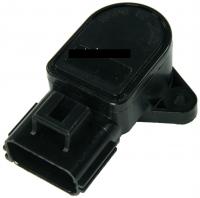
Re, ...where am I able to purchase the tps Try Ebay. You must be very careful when you undo the 2 screws holding the unit in place !! And also when you put the screws back in. They are very easy to break off. Try to get some heat in to the area around the bolts before you try to get them out !!!
-
My Car... 2005 BA MK2 Turbo 6 speed Manual. When cold would idle at 1200 rpm... When hot it should have been doing 750 rpm... But it used to dip below 750 rpm when pulled up at traffic lights... It used to go so low at times that it would stall... Sometimes it would go so low the Engine would make some " strange " noises but recover back to 750 rpm. I then replaced the TPS with the new Type and all was well after that. 1200 rpm when cold... 750 rpm when hot.
-
Your Car still could have the old Throttle Position Sensor Unit. If it looks like this... its the new type. But if its got a depression on the flat surface you still got the old one...
-
Special patrol car suffers catastrophic engine failure after being filled with E10. February 4, 2014 NSW highway patrol's FPV GT suffered engine damage after the wrong fuel was put in. Police have rebuilt a specially modified highway patrol car that suffered catastrophic engine damage when it was filled with the wrong fuel late last year. The Ford Falcon-based FPV GT required significant repairs after an officer apparently filled it with E10 fuel that the NSW government mandated as part of a push for cleaner emissions. NSW Police built the special Falcon GT as part of its 150th anniversary celebrations. The hot-rodded car has 400kW of power, well more than the 335kW maximum available to Ford customers. Advertisement The GT was the most powerful Australian police car when it went into service, though it has now been surpassed by a 430kW Holden HSV GTS also run by NSW Police. Fairfax Media understands that an officer filled the Ford with E10 fuel – a blend of 90 per cent regular unleaded and 10 per cent ethanol - as opposed to the high octane juice recommended by Ford. The NSW government has effectively abolished regular unleaded and encourages drivers to use E10, claiming it is “cheaper, cleaner and greener” and that “most NSW cars that use [unleaded fuels] can safely use 10 per cent ethanol-blended fuel (E10)”. It’s understood the misfuelling cracked the block of the 5.0-litre supercharged V8 engine, something that could have cost upwards of $5000 to repair. Superintendent Stuart Smith, operations commander for NSW highway patrol says he was “extremely disappointed” that the car was off the road for several weeks. “An individual put the wrong fuel in it,” Smith says. “From time to time we have errors made by staff. “Some damage has been done to the engine. It has been repaired.” Officers primarily use the V8-powered machine for public relations purposes. The car is often displayed at events including V8 Supercars and drag race meetings. Police in Sydney have used a range of cars for PR purposes including a Porsche Panamera, Lotus Exige and Mitsubishi Lancer Evolution. NSW highway patrol has been criticised in the past for ordering high-performance versions of local sedans that cost more than regular V8 or turbocharged models. The special Falcon is planned to go on display at the Justice and Police Museum in Sydney when it retires from duty. http://theage.drive.com.au/motor-news/engine-destroyed-in-oneoff-police-falcon-20140204-31y86.html
-
Re, So why don't you do a test like I did ?? You never know what you will find out...
-
Hi there Ralph When I did my Meter Test... I left it [Meter] hooked up over night... Next morning Meter was still showing 0.08Amp.
-
Vf Gts Vs The Europeans-Motor Mag Jan.2014
f-wolf replied to timetaker's topic in General Automotive Talk
I still remember the FPV Force 6 and FPV Force 8 from 2006. Ford was trying to get BMW, AUDI and MB owners / customers to buy one... Never happend. -
I hope this is a "Joke" !! The compression ratio in a non turbo Engine is much higher to start of with. The PCM [ Computer ] unit would have to be changed. And the list goes on and on and on........ My way of doing it... Sell the NA car and get a Turbo car. Or get one of these. http://www.ebay.com/bhp/turbo-sound-exhaust-whistle
-
Hope this link will help you http://stmarysautorepairs.com.au/index.php/ford-ignition-column-repair And this... :( http://www.wake.com.au/viewtopic.php?f=12&t=31407
-
I just spend an hour under the house in the garage doing some tests... My Car: 2005 BA MK2 Turbo 6 Speed Manual. This is what I did: No Key in Ignition 1x Digital Multimeter set to measure Amps...Set to 10A Disconnected Neg. Battery Cable 1 Probe Wire to Battery -, 1Probe to Battery Cable... I used clips to hold them in place. Open and close Driver Door... Wait till interior lights go out to get 1st Meter reading. In my case it was 0.27 Amp. After waiting for 15 Minutes the reading changed to 0.08 Amp. All of that tells me that the my BEM is working. http://postimg.org/image/ndph6ib99/

-
Also found this... Q, My Battery drains over night in my BF XR8 Falcon,,,auto elec mentioned "vehicle electrics module" appears to be draining with the ignition key removed at the rate of .2 amps,,then to 10 amps, fluctuating up and down,,,,have you heard of this before and if so what was the remedy please, A, I work as a diagnostic technician in a Ford dealership, there are some causes to the fault you are having in XR8 which are pretty common for the symptoms. On your drivers side seat do you have a seat cover, the problem is the seat cover pulls on the electric seat adjustment lever causing a cycling amperage draw with in the range you described. If you do not have a seat cover still check to see if the lever is jammed which still does happen without a seat cover. The other cause is a fault with the "Vehicle Electronics Module" which is technically called BEM "Body Electronic Module." Which fail very commonly, there is nothing to be nervous about, it is not a huge job but the BEM does require programming with the genuine diagnostic tool. http://www.justanswer.com/australia-car/33ian-battery-drains-night-bf-xr8-falcon-auto-elec.html
-
Battery ?? I don't know about a Battery in the ICC Unit.
-
Sorry... Don't know. The PCM would have to be "Adjusted"... Ford Dealer uses Computer to do so.
-
If you do change your diff to a different ratio you may have to go and see your dealer... And here is why... The diff ratio is programmed in to the PCM [ Computer] in your car... And so your Tire revs per Mile. Here are the numbers from my cars PCM for may BA MK2 Turbo 6 speed manual. 825 rpm per Mile / 1.6093 KM

-
Hope this will help you. Atomic Anchorlox® Ford 6 cylinder engines have a long stroke which causes harmonic resonance at high RPM and or high power levels. This manifests itself as vibration, which is transferred to external components such as manifolds, flywheels, harmonic balancers, etc. One common issue is turbochargers vibrating loose, irrespective of how tight the factory fasteners are. In this instance high temperatures also contribute to the fatigue of the standard bolts by annealing them over time. http://www.atomicperformanceproducts.com/anchorlox.html
-
Been reading all about the New Mustang's Gearbox... :( ?? Faulty Chinese-built transmissions plague new Ford Mustang http://jalopnik.com/5792482/faulty-chinese+built-transmissions-plague-new-ford-mustang More here: https://www.google.com.au/#q=Getrag+transmission+for+new+Mustang
-
Re , Pretty sure the car is running very lean ... the plugs showed signs of leaning out. What about the Fuel Filter ??
-
Throttle position sensor ?? More here: http://www.justanswer.com/australia-car/6h2wx-falcon-ba-futura-2005-ba-falcon-intermittent.html
-
Expensive Daewoo had a Problem a few years ago... September 24th, 2007 A technical adviser for a Sydney Expensive Daewoo dealership explained the following to CarAdvice: “The issue does vary alot with the different models. Expensive Daewoo have release updated BCM (Body Control Module) software to correct SOME of the charge problems, the new software changes the the rate of charge from the altenator and sets the BCM’s “state of charge” to a different tolerance. We have had some cases where the batteries in new VE’s have been faulty from factory, with the batteries only receiving half charge. When only given half charge from factory the ECU and BCM automatically see this as “default charge” and will only ever charge to that level. This level is enough to start the vehicle and operate all the systems, but the drain becomes too much for a half charged batteries, so if the problem is presented to the dealerships, the battery is usually replaced and the updated BCM software is installed. The drain issue changes from model to model, we have had a Calais V where we replace 2 modules of the electronic system to correct the battery drain issue. The issue can sometimes be the computer system (the high and low speed buses of the ECU and other components), they have a shutdown timer as they stay active after the vehicle has been shut off for other features of the vehicle, like lighting features and security. Sometimes they need resetting as they stay on for too long after the ignition has been turned off and can drain the battery.” http://www.caradvice.com.au/6514/holden-ve-commodore-battery-drain-issue-resolution/
-
I discovered some years ago... When I disconnected the Battery on my BA MK2 T. and then reconnected it, I could hear the Disc-Player resetting itself. Klick klick klick... and that is with NO KEY in the Ignition. So there must be a few things that are getting Power all the time... One would be the Door-Look System, the Instrument Electronic Unit, Sound/Radio System. When the Battery is disconnected/reconnected the Fuel and Km averages will go to 0. As I do not use my T every day ( Sometimes not for a few Weeks) I fitted A Quick-Disconnect Unit to the Battery. Its just a matter of turning a Knob.
-
http://www.4x4community.co.za/ An automatic transmission creates a lot of internal heat through friction: the friction of the fluid churning inside the torque converter, friction created when the clutch plates engage, and the normal friction created by gears and bearings carrying their loads. It doesn't take long for the automatic transmission fluid (ATF) to heat up once the vehicle is in motion. Normal driving will raise fluid temperatures to 80 degrees C., which is the usual temperature range at which most fluids are designed to operate. If fluid temperatures can be held to 80 degrees C., ATF will last almost indefinitely -- say up to 160,000 Km. But if the fluid temperature goes much higher, the life of the fluid begins to plummet. The problem is even normal driving can push fluid temperatures well beyond safe limits. And once that happens, the trouble begins. At elevated operating temperatures, ATF oxidizes, turns brown and takes on a smell like burnt toast. As heat destroys the fluid's lubricating qualities and friction characteristics, varnish begins to form on internal parts (such as the valve body) which interferes with the operation of the transmission. If the temperature gets above 120 degrees C., rubber seals begin to harden, which leads to leaks and pressure losses. At higher temperatures the transmission begins to slip, which only aggravates overheating even more. Eventually the clutches burn out and the transmission calls it quits. The only way to repair the damage now is with an overhaul. As a rule of thumb, every 10 degree increase in operating temperature above 80 degrees C. cuts the life of the fluid in half! At 90 degrees C., for instance, fluid life is reduced to 80,000 km. At 105 degrees, which is commonly encountered in many transmissions, the fluid is only good for about 40,000 Km. At 115 degrees C., the fluid won't go much over 16,000Km. Add another 10 degrees, and life expectancy drops to 8,000 Km. Go 150 degrees C., and 1,600 to 2,400 Km is about all you'll get before the transmission burns up. If you think this is propaganda put forth by the suppliers of ATF to sell more fluid, think again. According to the Automatic Transmission Rebuilders Association, 90% of ALL transmission failures are caused by overheating. And most of these can be blamed on worn out fluid that should have been replaced. On most vehicles, the automatic transmission fluid is cooled by a small heat exchanger inside the bottom or end tank of the radiator. Hot ATF from the transmission circulates through a short loop of pipe and is thus "cooled." Cooling is a relative term here, however, because the radiator itself may be running at anywhere from 82 to 105 degrees C.! Tests have shown that the typical original equipment oil cooler is marginal at best. ATF that enters the radiator cooler at 150 degrees C. leaves at 115 to 135 degrees C., which is only a 10 to 20% drop in temperature, and is nowhere good enough for extended fluid life. Any number of things can push ATF temperatures beyond the system's ability to maintain safe limits: towing a trailer, mountain driving, driving at sustained high speeds during hot weather, stop-and-go driving in city traffic, "rocking" an automatic transmission from drive to reverse to free a tire from mud or snow, etc. Problems in the cooling system itself such as a low coolant level, a defective cooling fan, fan clutch, thermostat or water pump, an obstructed radiator, etc., will also diminish ATF cooling efficiency. In some cases, transmission overheating can even lead to engine coolant overheating! That's why there's a good demand for auxiliary add-on transmission coolers. From: http://www.4x4community.co.za/forum/showthread.php?t=69384
-
Well.. If the Car starts and works without the Unit... it can only be the Unit that stops your Engine. I am in Canberra. If your are near Canberra I would/could help you.