Yortt
Member
-
Joined
-
Last visited
Everything posted by Yortt
-
Fixed! was a solenoid. local trans workshop diagnosed it from my description did not look at the car I asked how to identify the B solenoid which in the trans are marked S1 S2 S3 S4 said you need a book (I could not find that information anywhere) and would not elaborate further so I booked the car in.
-
Well that did not work! P0758 (solenoid B) the solenoids in the transmission are marked S1 S2 S3 does anyone know which one is solenoid B as indicated by the scan tool fault code P0758
-
I serviced it when this first happened made no difference. Have unplugged the transmission connectors and the PCM connectors. sprayed them with electrical cleaner and worked them on and off several times so far so good.
-
just done another scan with Forscan this time it picked up a code P0758 now I can address the problem. thanks to those who replied.
-
Puffwagon thanks for your thoughts. Just spoke to the local ford dealer service department could not tell me where I could source a list of the dash codes including the one I was seeing. I would have to bring the vehicle in and have it scanned the cost $200 (5 minute scan) and I thought my heart specialist knew how to charge! Rang ford Australia which took my vin number and tried to assist however advised they were not technical enough and I should try another dealer. Well, off to the local transmission specialists to see if they can help.
-
k31th. thanks for the reply, I have checked for fault codes with HP Tuners and Forscan and there are no fault codes logged. It is annoying that the car is identifying a transmission (BTR) fault but nothing is being logged happened several times today.
-
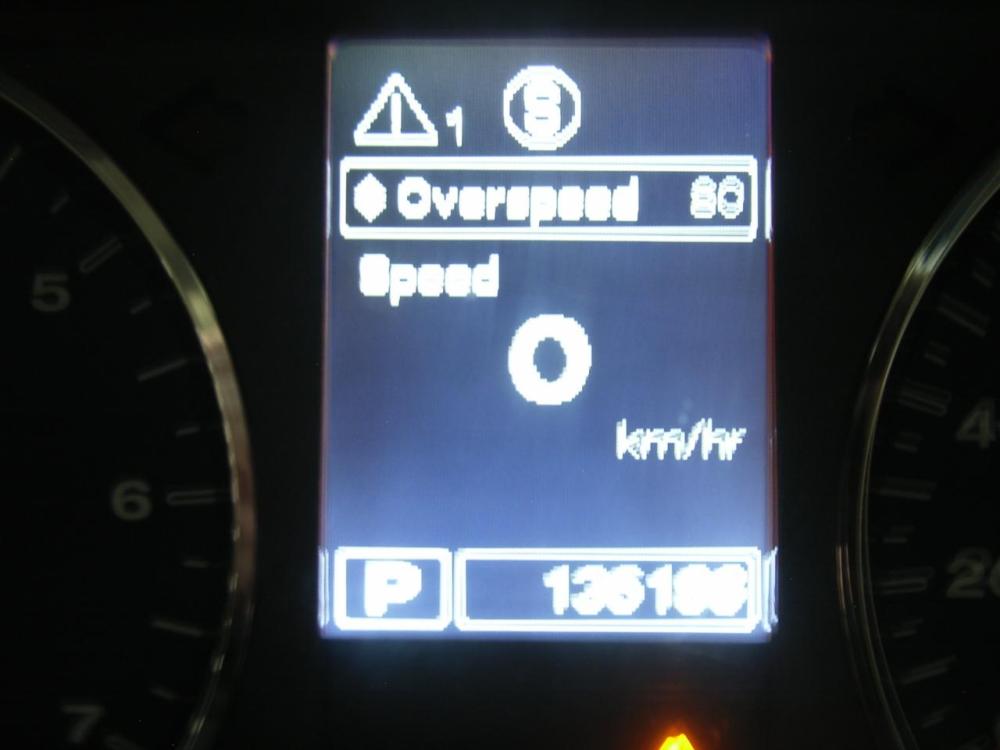
2008 G6 LPG falcon I have a transmission fault come up on the dash screen (no fault logged with scanner) yellow triangle with exclamation mark says press "SEL" when I press SEL it comes up with a white triangle with an exclamation mark with the numeral 1 beside it. Does anyone know what this means or where I can find the information? Thanks John
-
Ok Thanks!
-
Thanks for that list of pids , I have configured the histogram in various configurations and will still only show counts, hopefully with this list of pids it will now work. Can anyone tell me what the significance/difference of upper and lower case pids are? Can anyone tell me which option should be used and under what circumstances the other two option would be used? Use previous list of pids if available (validate all other pids otherwise) Validate all pids in list do not validate pids Thanks!
-
I used some lowercase and some uppercase, I read somewhere uppercase should be used, what is the significance? It is difficult to determine which is the correct pid to use. The ones I want to log are: LOAD_FROM_MAP (several to choose from not sure what the difference is) SPKADD_AVG_ALL (knock retard seems to work ok) RPM (seems to work ok) INJECTOR PULSE WIDTH (Appears not to have a pid for this) On the chart screen they display fine on the histogram it will only show the count
-
Buggered if I know what I am doing wrong tried that way! will have to go over the steps again, there is not a lot to set up and appears very little to go wrong but I can only fill the histogram with counts nothing else works, anyway thanks for the reponse.
-
Has anyone used the new Livelink Gen-11 scanner software and if so have you had any success geting the histogram to work?. I have tried and can only get the counts to work on an FGXR6T!
-
I guess the question I ask myself how do you determine if an engine is knocking and which is more accurate for determining this, the manufactures knock sensing hardware/software or an aftermarket one or the human ear with a listening device. My money is on the manufactures hardware/software which is calibrated for the specific engine type. It looks for knock in a narrow window of time in relation to the ignition cycle, it is looking for a specific frequency based on cylinder size and then filters all unwanted frequencies, it is looking for the intensity of signal generated by the knock sensor and depending on intensity of the signal from the knock sensor the level of knock is determined. This is then compared to preset parameters in the tune program from development work done by engineers for that specific engine, below these preset parameters it is considered not to be knocking above the preset parameters it is considered to be knocking. While aftermarket knock sensing is definitely better than nothing (noting VCM suite does not report knock) I believe that no aftermarket knock detection system can match the manufacturers knock detection sophistication.
-
Ratter I acknowledge the positive contribution you have made to this forum over a long period, and I can see how I would be viewed as a "Johnny come lately" however I feel as strongly about road/track tuning from experience as you obviously do about dyno tuning and as you said "Every one is welcome to believe what they want"
-
"Yortts post is again a classic example of cut and paste" This is what I have experience from comparing dyno tuning and tuning at the track, my experience is from Holdens and turbo 4cylinders. I made it quiet clear that the article was lifted from the net and I did so as it was written by a very experienced reputable motoring journalist not a hack journalist as suggested. The information is now everywhere on the net, those that want to be enlightened search read evaluate weigh up the varying opinions and conclude for yourself. I am not asking anyone to agree with me or dictate my opinion to any one just offering an alternate view based on my experience. "A smart dyno operator will run the dyno at a ramp rate that close to matches the acceleration rate of the car in the gear being tested" All I can suggest to others reading this post is next time you have your car run up on the dyno note the number of seconds it takes to do the run then go to the track and do the same test in the same gear and compare the time in seconds again, this will answer the question. "Your point about MBT is wrong, different configuration motors will drop power sometimes before knock has been reached while others will make more power while pinging, guess which one the Ford turbo is, yes the one that making power while pinging with 98 octane fuel, so your drag mph could end up with a motor that is grenaded by tuning it that way, but what about part throttle mbt etc how are you going to do that? On 98 octane fuel and below I do not accept your premise and no one is suggesting you drive the tune past the knock threashold. Any thing above 98 octane fuel I would agree with you as you the have the ability to light it up too early BTDC in the compession stroke and achieve maximum cylinder pressures too early ATDC and loose power. "The ford calibrated knock sensor is far from accurate and will pull spark when there is no knock, we have proved this time after time with electronic knock detection and it also picks up knock events before the human ear will." I know the sophistfication of the Expensive Daewoo knock system and logic would dictate that Ford would be very similar and would have spent millions of dollars developing knock detection in particular for forced induction, no aftermarket system would have access to the expertise or budget ford would have. Your comment "The ford calibrated knock sensor is far from accurate and will pull spark when there is no knock" given my above comments I can not see how any independent workshop could have access to equipment to determine this. No aftermarket knock sensing has the ability to listen through the correct window in the combustion cycle filtering all unwanted noise and listening to the specific knock frequency generated by that particular engine and accurately determine the intensity level I know Expensive Daewoo do and I see no reason why Ford would not. .
-
Thanks for that, after talking to Herrods the impression I got was that over the last six months there has been a substantial increase in the number of pids that can be logged, probably not necessary for basic tuning but may help with problem tune issues which would be good to have. Another question, with a standard ford tune in a pcm it is in binary form (IE .bin) when this is downloaded with VCM Suite it is automaticaly scrambled and called a tune file (IE .tune) Does any software download from the PCM in a binary file so it can be looked at with a binary editor?
-
My 2 cents worth, not trying to offend anyone just my opinion from experience "How are you going to know whether it's pinging or not?," Ford engineers have spent millions of $ on developing knock detection to protect these engines while optimising power for fuel variations listening through specific listening windows and filtering unwanted noise no aftermaket system or the human ear can match it! "What wide band are you going to use on the road tuning," Most aftermarket widebands have a 0-5 volt output that can be interfaced to the logger "What wide band are you going to use on the road tuning, how are you going to adust a rich mixture at 2000 rpm and a lean mixture at 3000?" VCM suite will do this! "What tp setting for what boost are you going to go open loop fuel? doesn't matter you can not adjust it with the handset anyway" Again VCM suite will do this! "How are you going to simulate high load in top gear on the road with out doing 190 kmh while watching the laptop and afr's etc" I would suggest the local drag track and dattalog. How does a dyno operator know what load is on a specific car at 190kph I would suggest this would be guess work. "How do you know you have exceded mbt even though the motor is not pinging, that's right you won't" My experience with optimising 1/4 mile times is given the octain rating of pump fuel including E85 on a turbo car the knock threashold is well below the MBT hence the closer you can get to the knock threashold on the road and track the closer you get to the MBT the faster it will go. Following is an article from a reputable motoring journalist that make interesting reading Lifted from AutoSpeed Blog » Blog Archive » For Godsake, for some testing forget the bloody dyno – get out on the road! For Godsake, for some testing forget the bloody dyno – get out on the road! Posted on December 4th, 2005 in Opinion by Julian Edgar Why is it that people put so much faith in dyno testing? I have written about this topic before (see Driving Emotion – August 2004) but it needs to be continually shouted from the rooftops. Dynos are bloody useless in so many areas of car modification testing that I don’t know even where to start. But I’ll try. As I wrote in that previous column, they’re pretty well useless for testing turbo boost controls. Why? Well they: •Don’t take into account the acceleration rate of each gear – vital because boost overshoot on transients is hugely affected by the rate of engine rpm increase. •They don’t allow the testing of boost behaviour of full-throttle gearchanges (very few people do full throttle gearshifts on the dyno). Again, it’s in just these conditions that you look for boost overshoots and/or slow increases back to peak boost after each gearchange. •No one ever does a full-bore launch from a standstill on a dyno. And the speed with which boost can be brought up in these conditions – ie controlling wastegate creep – is a major aspect of good boost control. •On the dyno people never trial all the different combinations of throttle position, load and engine rpm that you’ll find in a few days of road driving. (I originally said in 10 minutes on the road, but let’s be scrupulously fair.) None of this is hard to understand: making sure that boost doesn’t exceed a certain level in relatively slow-changing engine conditions is vastly easier than doing the same on transient – but major – changes in engine load that might be completed over just a few seconds. And finally, I made the point that an intercooler cannot be effectively tested on a dyno. Recently I have been testing intercooler water sprays. As you would expect from this prelude, the testing has been done on the road. We have written about it in the past: all other things (like drop size) being equal, the effectiveness of a water spray is highly dependent on the mass-flow of ambient air through the ‘cooler. But let’s take it further. In fact, it’s the global airflow over, under and around the car which will determine how well a spray works. Why? Because it’s this airflow that determines how much air passes through the intercooler. If there is little air passing through the core, the water droplets will evaporate on the surface of the core, cooling only a tiny proportion of it. On the other hand, if there is plenty of air passing through the core (and plenty of evaporating water droplets to go with it!) the majority of the core thickness will be cooled. Irrespective of the size of the fan stuck in front of the radiator, a dyno simply does not replicate this global airflow. It doesn’t even come close. And that applies to some dyno fans that I have seen that are massive – housed in a cube-shaped frame standing taller than I am. To get airflow that is characteristic of the road – and those characteristics include speed, degree of turbulence, temperature and relative humidity – a full climate-controlled wind tunnel is needed. And those don’t use fans as tall as I am – instead they use a fans many metres in diameter and driven by enormously powerful electric motors. Most wind tunnels are also of the recirculating design and have high-speed moving floors. So, recently seen a modified car workshop with a climate-controlled, moving-floor wind tunnel with a dyno in it? No, neither have I. Very, very clearly, writing something like: “I experimented with a water spray when my car was being dyno’d recently and it made stuff-all difference – there was no noticeable improvement on the dyno with my front-mounted 600x300x75 cooler” is rather like saying: “When I moved my car from the driveway into the shed, I could detect no improvement in the handling of the new tyres”. If you are not exactly replicating the real-world conditions in which you are trying to gain an improvement, what worth is the testing? In fact it is worse than useless – it is potentially misleading. It’s not as if on-road testing is difficult or expensive. Just put a fast response temp probe in the intake air stream and watch it as you drive around. [And if the car is of such performance this cannot be done on the road, (1) you wonder what use it is as a road car, and (2) you can always hire a track.] Have a switch that manually turns the spray on and off, and remember what the numbers show in different situations. Without spending a cent, you have a moving road, the correct global airflow including such subtleties as real world turbulence, accurate engine loads for the available airflow, and so on and so on. It’s in this way that you can find that in some turbo intercooled cars, peak intake temps on load occur immediately after being stopped in traffic. Or in other intercooled turbo cars, a slow climb up a long hill when stuck behind a truck can cause intake air temps to go higher than when on a full-boost, through-the-gears 0 – 150 km/h run. Or in other intercooled cars, 15 minutes of consistently hard driving will blow intake air temps out of the water. You’ll also be able to see in what conditions of road speed, ambient temperature, and load history an intercooler spray is effective. In experience of my own turbocharged intercooled road cars (13 different intercooling systems on nine turbo cars over nearly 20 years), an intercooler spray that is triggered by a dumb boost pressure switch spends most of its time wasting water. The spray control system must have the intelligence to at least monitor intercooler core temp (or, less preferably, intake air temp) and engine load. To think that a quick dyno run at full throttle (or even 30 ramped dyno pulls, one after the other) is going to tell you anything much about on-road intake air temps, or the efficiency of an intercooler water spray, is completely fallacious. And the great thing is, it’s so easy and cheap to get absolutely cast-iron validity in your results. Just do the testing where you drive the bloody car…
-
I am referring to the current X-cal3 I don't have any experience with SCT I am just repeating what I was told in a telephone conversation with Herrods. I am just trying to unravel what I can do and cannot do before committing to buying a new unit or second hand unit as I have experienced what tuning software suppliers do to optimise their return
-
Yes but if they do not have the standard tune in them then you can not download the latest logging operating system. I would have thought most that are sold have not been put back to the standard tune so buying a second hand one might leave you with the inability to use all the new pids also any future new pids.
-
I do a lot of dattalog tuning on Holdens including forced induction as far as I am concerened I would not attempt to tune (particular forced induction) If I could not log AFR and knock VCM suite does not log knock so not knowing where the knock threashold is I can not tune with VCM suite logging. Rang Herrods was advised their SCT can log knock and can have a wideband interfaced, Herrods also advised me that they have just finished doing a sustantial upgrade on their logging, the number of logging pids available have been increased. To get this upgrade you have to download the upgraded operating system into your scan tool. Looks like there is no alternative if tuning Ford with VCM suite you also have to have SCT for logging
-
Thanks for clarifying logging not locked 4 Bar map not me this is stee3 post
-
Thanks for the reply the vehicle I have is an FG, just spoke to my mate he has told me his SCT is locked to his vehicle (BF) consequently it will not log my vehicle is this correct? Just trying to get my head around what can and can not be done with other hardware and software as the suppliers/developers go to a great deal of effort to lock you out from deviating from what they intended the procedure to be.
-
Thanks for the responses, I found it and downloaded it I have couple of questions Obviously I need hardware to log what are the options? buy a second hand SCT? If I borrow a hand controller off a mate and use it for logging will it have any adverse effect on the borrowed hand contoller when connected to the owners vehicle again? Is there a log file available anywhere so I can load it and have a look at a log? Obviously what I want to do is log with this software (or any other available) and tune with VCM suite. Thanks for the help
-
From what I read you can not purchase the tuning software unless you have a dyno workshop front etc etc etc. Does this also apply to the logging software, the reason I ask is vcm suite falls short because it can not log knock.
-
Out of interest what tuning and logging software are you using? Thanks Yortt